

Unlock the Power of Pranayama for Better Health in 2025
Unlock the Power of Pranayama for Better Health in 2025
In 2025, health challenges are no longer limited to physical illness alone. Mental stress, emotional imbalance, anxiety, burnout, lifestyle disorders, and lack of inner peace have become common across all age groups. Despite advanced medical systems and modern wellness trends, people around the world are turning back to ancient practices for sustainable and holistic well-being. One such timeless practice is Pranayama.
Pranayama, the ancient yogic science of breath control, is not merely a breathing exercise. It is a powerful tool rooted in Sanatan Dharma that harmonizes the body, mind, and consciousness. In an era dominated by screens, deadlines, and constant stimulation, pranayama offers a natural and accessible path to better health, mental clarity, emotional balance, and spiritual growth.
This comprehensive guide explores the power of pranayama, its benefits in 2025, how it works, different types of pranayama, and how you can integrate it into your daily life for long-term wellness.
What Is Pranayama? Meaning, Origin, and Philosophy

The word Pranayama comes from two Sanskrit words:
-
Prana – life force, vital energy, breath
-
Ayama – expansion, control, regulation
Pranayama literally means the regulation and expansion of life energy through conscious breathing.
In Sanatan Dharma, breath is not seen as a mechanical process but as the bridge between the body and the mind. Ancient yogic texts such as the Yoga Sutras of Patanjali, Hatha Yoga Pradipika, and Upanishads describe pranayama as a foundational practice for physical purification, mental discipline, and spiritual awakening.
According to Patanjali, pranayama is the fourth limb of Ashtanga Yoga and acts as a gateway to meditation. When the breath becomes steady, the mind naturally becomes calm. This is why pranayama has been practiced for thousands of years as a preparation for dhyana (meditation) and samadhi.
Why Pranayama Is More Important Than Ever in 2025

Modern life has created an unprecedented disconnect between humans and their natural rhythms. In 2025, common health concerns include:
-
Chronic stress and anxiety
-
Sleep disorders
-
Poor posture and shallow breathing
-
Digital fatigue and mental overload
-
Lifestyle diseases such as hypertension and obesity
Most people breathe unconsciously and inefficiently, which directly affects oxygen supply, nervous system balance, and mental stability. Pranayama addresses this root issue by restoring natural breathing patterns and improving awareness of the breath.
Unlike temporary wellness trends, pranayama requires no equipment, no cost, and no extreme physical effort. It is sustainable, inclusive, and adaptable to all age groups, making it one of the most relevant health practices of our time.
How Pranayama Works on the Body and Mind
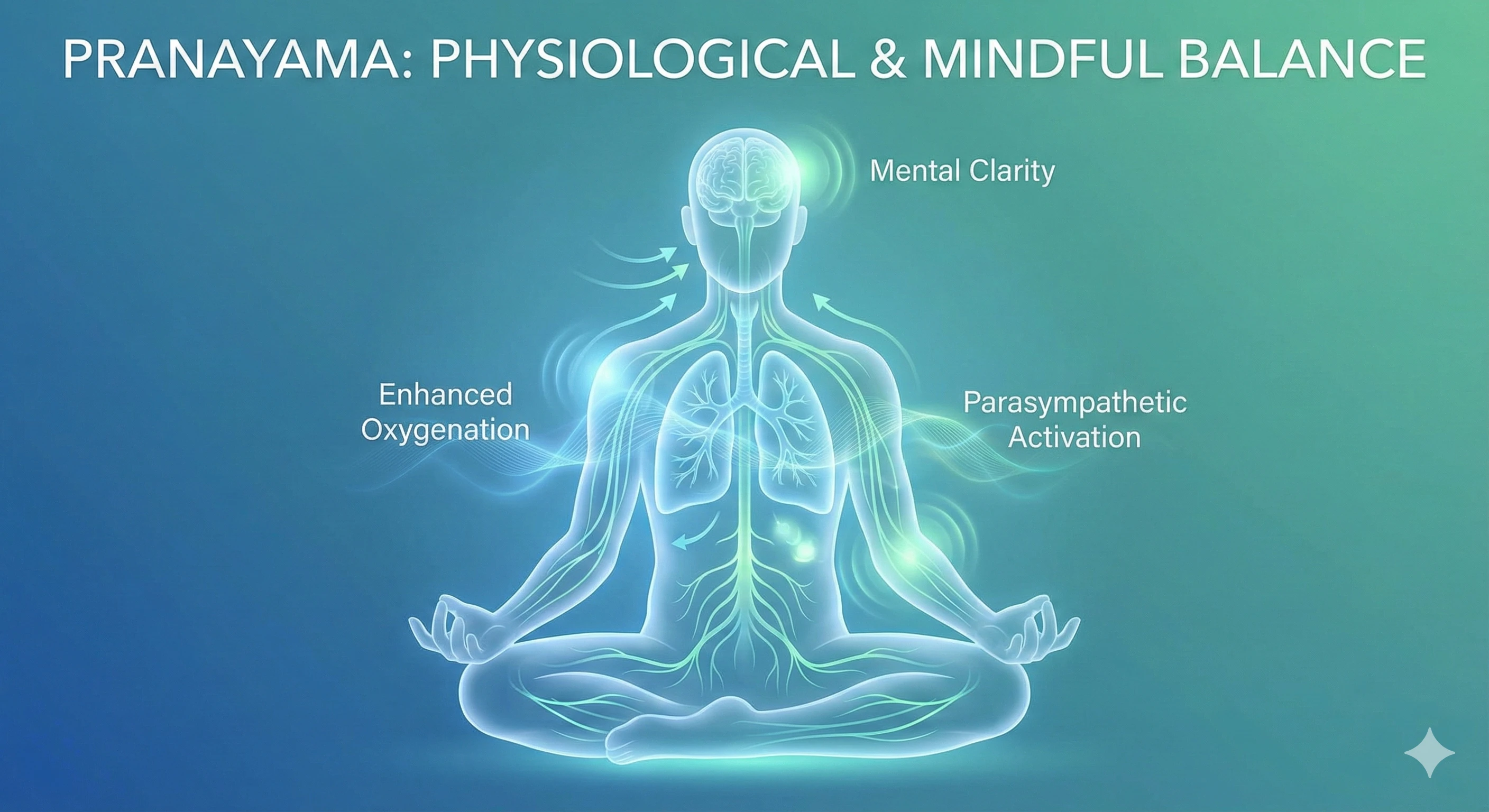
Pranayama works at multiple levels of human existence—physical, mental, emotional, and energetic.
Impact on the Nervous System
Slow and controlled breathing activates the parasympathetic nervous system, responsible for relaxation and healing. This reduces stress hormones like cortisol and helps the body recover from chronic tension.
Oxygenation and Cellular Health
Deep breathing improves oxygen delivery to cells, enhancing metabolism, detoxification, and overall vitality. Better oxygen flow means better organ function and improved immunity.
Mind–Breath Connection
The breath directly influences mental activity. Rapid, shallow breathing increases restlessness, while slow, rhythmic breathing calms thought patterns. Pranayama trains the mind through the breath.
Energy Balance
In yogic science, pranayama balances the nadis (energy channels), especially Ida and Pingala, leading to mental clarity and emotional stability.
Top Health Benefits of Pranayama

1. Improves Respiratory Health
Regular practice of pranayama strengthens the lungs, improves lung capacity, and enhances breathing efficiency. It is beneficial for people suffering from asthma, allergies, and respiratory weakness when practiced correctly.
2. Reduces Stress and Anxiety Naturally
Pranayama is one of the most effective natural methods for stress management. Practices like Anulom Vilom and Bhramari calm the nervous system, reduce anxiety, and promote mental peace without medication.
3. Enhances Mental Clarity and Focus
Controlled breathing increases blood flow to the brain, improving concentration, memory, and decision-making ability. This makes pranayama highly beneficial for students and professionals.
4. Boosts Immunity and Energy Levels
By improving oxygen supply and reducing stress, pranayama strengthens the immune system and increases overall energy. Practitioners often experience reduced fatigue and greater stamina.
5. Supports Heart Health and Blood Pressure
Slow breathing techniques help regulate heart rate and blood pressure, making pranayama a supportive practice for cardiovascular health.
Mental and Emotional Benefits of Pranayama

In 2025, mental health is as important as physical health. Pranayama plays a vital role in emotional well-being by:
-
Reducing overthinking and mental noise
-
Improving sleep quality
-
Enhancing emotional resilience
-
Managing anger, fear, and restlessness
-
Promoting inner calm and self-awareness
Regular pranayama practice helps individuals respond to situations with clarity rather than reacting impulsively.
Spiritual Benefits of Pranayama in Sanatan Dharma

Beyond health, pranayama holds deep spiritual significance in Sanatan Dharma.
Breath is considered a carrier of prana, the universal life force. By regulating the breath, one gains control over pranic flow, which purifies the mind and prepares the practitioner for meditation.
Pranayama helps:
-
Awaken dormant spiritual energy
-
Balance internal energies
-
Improve meditation depth
-
Strengthen discipline and awareness
-
Support the journey toward self-realization
In yogic tradition, pranayama is not an end but a bridge between physical practice and spiritual insight.
Types of Pranayama and Their Benefits

Anulom Vilom (Alternate Nostril Breathing)
Balances both hemispheres of the brain, reduces stress, and improves focus. Ideal for daily practice.
Kapalbhati
A cleansing technique that supports digestion, detoxification, and metabolic health. Should be practiced with caution.
Bhastrika
Energizing breath that boosts vitality and clears mental fog. Helpful for lethargy and low energy.
Bhramari
Produces a humming sound that calms the mind and reduces anxiety. Highly effective for mental relaxation.
Ujjayi
Slow, rhythmic breathing that enhances awareness and concentration, often used in meditation and yoga practice.
How to Practice Pranayama Safely (Beginner Guide)

For beginners, pranayama should be practiced with simplicity and consistency.
-
Practice on an empty stomach
-
Sit in a comfortable posture with a straight spine
-
Start with 5–10 minutes daily
-
Focus on gentle, controlled breathing
-
Avoid forceful techniques initially
Consistency is more important than intensity. Over time, duration and depth can be increased gradually.
Who Should Practice Pranayama and Who Should Be Careful
Pranayama is suitable for most people, including children, adults, and seniors. However, individuals with severe medical conditions, pregnancy, or recent surgeries should consult a qualified yoga practitioner before starting advanced techniques.
Integrating Pranayama into Daily Life in 2025

Pranayama does not require a separate lifestyle. It can be integrated into daily routines:
-
Morning practice for energy and clarity
-
Short sessions during work breaks
-
Evening practice for relaxation and better sleep
-
Combined with meditation and yoga for holistic growth
Even 10–15 minutes daily can create long-term positive changes.
Pranayama vs Modern Wellness Trends
While supplements and quick-fix wellness solutions offer temporary relief, pranayama works at the root level. It is natural, sustainable, cost-free, and aligned with the body’s intelligence.
Pranayama empowers individuals to take responsibility for their health rather than depending solely on external solutions.
Conclusion: Begin Your Pranayama Journey Today
In 2025, true health is not defined only by physical fitness but by inner balance, mental peace, and spiritual alignment. Pranayama offers a timeless solution to modern problems by reconnecting us with our breath—the source of life itself.
Rooted in Sanatan Dharma and validated by modern science, pranayama is a powerful daily practice that supports physical health, emotional stability, mental clarity, and spiritual growth.
By making pranayama a part of your daily routine, you invest in long-term wellness, inner harmony, and conscious living. The journey begins with a single breath—taken with awareness.